
Business gas
Business gas, explained and reviewed
Business gas is supplied on a contract with a unit rate per kWh and a daily standing charge. Your supply point is identified by an MPRN. Like electricity, business gas has no price cap.
How business gas is charged
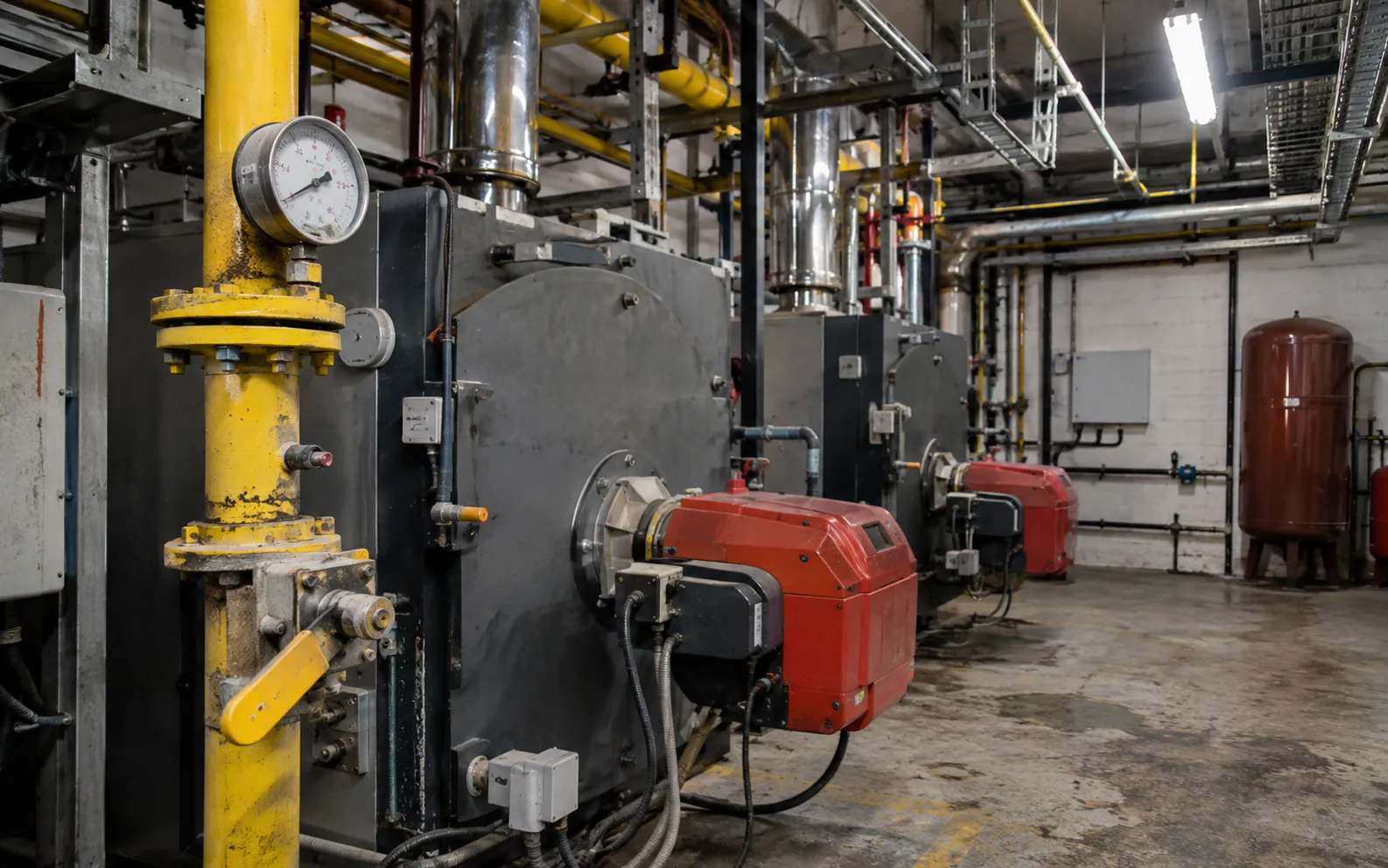
Your meter measures gas by volume, in cubic metres or cubic feet. Your supplier converts that to kWh using a calorific value and a volume correction factor, then charges the unit rate on the kWh figure. You'll see this conversion on your bill.
| Charge | What it is |
|---|---|
| Unit rate | Pence per kWh of gas used. |
| Standing charge | A fixed daily amount for the supply point. |
| Climate Change Levy | Applies unless your use is low enough to be exempt. |
| VAT | Usually 20%. Supplies averaging no more than 145 kWh a day qualify for 5%. |
Who uses most gas
Gas use is driven by heating, hot water and cooking for most businesses, and by process heat in manufacturing. Use is often strongly seasonal, so suppliers look at your annual consumption rather than one month's bill.
Annual quantity (AQ)
Suppliers price gas partly on your annual quantity, an industry estimate of how much gas the supply point uses in a year. If your use has changed a lot, mention it, as an out-of-date figure can affect the price you're offered.
Questions
Where do I find my MPRN?
On your gas bill, usually labelled MPRN or meter point reference. See MPRN explained.
Do I need gas and electricity from the same supplier?
No. You can have different suppliers, and sometimes separate end dates make that the practical choice.
We introduce enquiries to an energy broker partner and may receive a fee. We're not a supplier and don't give whole-of-market advice. How we're paid
Your next energy contract deserves a closer look.
About two minutes. No obligation.